


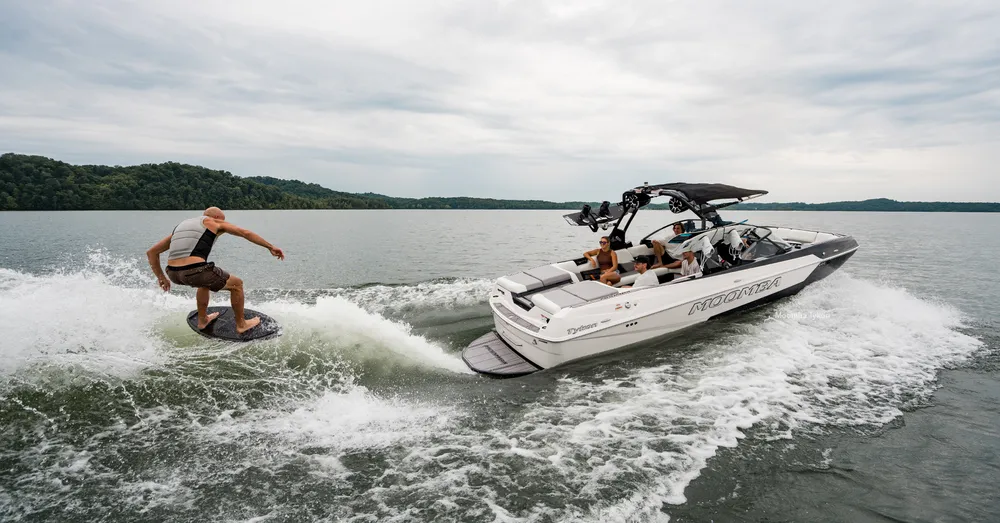
Introducing someone to the world of tow sports is one of the most rewarding parts of owning a boat, especially when you are spending a beautiful summer weekend out on Lake Lewisville or Possum Kingdom Lake. Watching a friend or family member rise out of the water and find their balance for the first time is a massive win for the whole crew. But if you are getting your gear ready for the weekend, you might be trying to decide whether it is better to strap into a wakeboard or pull up a wakesurf board first. Both sports offer incredible fun, but they rely on completely different speeds, gear configurations, and water dynamics to give a beginner a successful, confidence-building ride.
By understanding how each sport functions and keeping critical safety steps at the forefront, you can choose the perfect activity to get your new riders up and smiling from their very first pull.
The Basics of Wakeboarding: High Energy and Big Jumps
Wakeboarding is all about speed, momentum, and learning to catch air. If your crew loves fast-paced action and long, thrilling runs across the water, wakeboarding is an excellent challenge to take on.
- How It Rides: The rider wears supportive, secure bindings that lock their feet flat onto the wakeboard. You hold onto a long tow line connected directly to the boat's wake arch or tower. Getting up requires leaning back and letting the boat pull you over the surface, using the edges of the board and its tracking fins to steer back and forth across the wake.
- Calibrating Your Speed: Wakeboarding requires a slightly quicker pace to keep the board up on plane. For kids and adult beginners, the captain will want to maintain a steady speed between 16 and 18 MPH. More experienced riders usually prefer a faster window between 19 and 22 MPH.
- What to Expect on a Fall: Because wakeboarding moves at a faster clip, catching an edge means you will hit the water with a bit more energy. It is completely normal to tumble, so ensuring the rider is relaxed and the driver keeps a sharp eye out with smooth throttle management makes all the difference.
The Basics of Wakesurfing: Low Speed and Endless Waves
Wakesurfing mimics ocean surfing, allowing you to ride the continuous wave produced right in the pocket behind the boat's transom. It has exploded in popularity because it is easy on the body and incredibly social.
- How It Rides: You stand on a loose, binding-free surfboard equipped with high-grip traction pads. You start by holding a short, heavily knotted rope just to pull yourself up into the "sweet spot" of the wave. Once you find the pocket of propulsion energy, you can toss the rope right back into the boat and surf completely rope-free.
- A Safer, Gentler Pace: Wakesurfing is done at a highly conservative speed—typically between 10 and 11.5 MPH. Because the boat is moving slowly, falls are very gentle, making it a wonderful option for beginners of all ages. It also allows the crew on the rear lounge to easily chat with and cheer on the surfer.
- Wave Engineering Requirements: Creating a surfable wave requires a boat with automated ballast systems to sit the stern deep in the water column, paired with integrated wake-shaping plates to shape the perfect curl.
CRITICAL PROPELLER SAFETY DIRECTIVE: Never, under any circumstances, attempt to wakesurf behind a traditional outboard motor or a sterndrive (I/O) boat. Because the surfer rides very close to the back of the boat, an exposed spinning propeller creates a fatal hazard. Wakesurfing must be done exclusively behind inboard V-drive boats or forward-facing propulsion layouts where the running gear is tucked safely deep beneath the hull footprint.
Getting Your Crew and Gear Staged for Success
A smooth, successful day of teaching beginners depends entirely on having the right gear properly adjusted before you clear the no-wake zones.
- Ensure a Snug Life Jacket Fit: Every rider must wear a properly fitted, Coast Guard-approved Type III life vest. Make sure the buckles are cinched tightly so the jacket doesn't ride up past the rider’s chin when they hit the water, keeping their mouth completely clear of the waterline.
- Match the Board to Rider Weight: Trying to teach a beginner on a board that is too small for them will cause the board to stall during a deep-water start. Ensure your board has enough surface area and buoyancy to float the rider’s weight easily, allowing them to plane off smoothly without forcing the engine to strain.
- Keep the Deck Tidy: Never let loose tow ropes snake across the passenger deck or floorboards. Keep lines coiled neatly and stowed away inside your sub-floor storage lockers until the boat is fully stationary outside active navigation channels.
Choosing the Right Time and Water Conditions
The condition of the lake surface plays a massive role in how quickly a beginner can successfully pull themselves up out of the hole shot.
- Seek Out Smooth Water: Trying to train a new rider through choppy, high-density weekend boat traffic creates fast physical fatigue and unnecessary frustration. Plan your instructional sessions around quiet, low-traffic weekday mornings or head into sheltered, windward shorelines where the water stays nice and glassy.
- Use a Smooth, Gradual Throttle: When pulling a beginner up, avoid slamming the throttle handle forward all at once. Apply smooth, linear acceleration to lift the rider gently out of the water without straining their arms or causing a sudden heat spike in your engine cooling tracks.
Frequently Asked Questions
Which sport is easier for a first-time rider to learn? Wakesurfing is generally considered much more accessible for beginners. The slow speed (around 11 MPH) means falls are low-impact and non-intimidating, and not being locked into fixed boot bindings makes it much easier to adjust your feet and find your balance naturally.
Can I set up a standard dayboat to generate a safe wakesurfing wave? No. A predictable, surfable wave requires a specialized platform equipped with built-in ballast tanks and digital wake plates. More importantly, attempting to surf behind a standard outboard or sterndrive watercraft places the rider dangerously close to a spinning prop, which is a critical safety violation.
Factory-Authorized Components & Expert Maintenance
Keeping your boat's ballast pumps, speed controls, and wake-shaping arrays running flawlessly is the key to creating the perfect wave.
- Certified Marine Care: Whether you need to calibrate an automated ballast pump loop, trace a dashboard warning code, or service your digital wake plates, trust the factory-trained specialists at our local Service Center to keep your vessel in prime condition.
- Genuine OEM Parts Counter: For do-it-yourself mariners handling their own preventative care, our dedicated Lewisville Parts Center stocks premium starting batteries, factory filters, water pump impellers, and fresh fluids.
- Outboard Engine Modernization: If your older power plant is causing frequent breakdowns or lacks modern digital fuel efficiency, explore our authorized Repower Mercury options to restore your peace of mind on the water.
Financial Support & Trading Your Fleet
What payment choices exist for financing advanced tow-sports technology or electronics packages? Our specialized Financing office builds clear, customized loan packages. We can seamlessly bundle your chosen boat, high-performance outboards, technical electronics, and comprehensive Marine Insurance protections into a single monthly plan.
Can I trade in my current dayboat to upgrade to a modern water sports platform? Yes. We offer quick, transparent, and market-accurate appraisals so you can avoid the stress of private selling. Submit your boat's details to our Sell / Trade division to apply that equity directly toward our premium inventory of New Boats or thoroughly inspected Used Boats.
How do I get in touch with the team at Slalom Shop? To learn more about our corporate history serving Texas mariners since 1977, visit our About Us page. You can track our upcoming safe-boating clinics and boat shows on our Events calendar, read helpful maintenance articles on our Blog, or check out verified customer feedback on our Reviews directory. To explore your long-term protection options, check our Extended Service Contracts page, view seasonal promotions on our Specials checklist, or find showroom maps and hours across all our dealer hubs on our main Contact Us portal.