

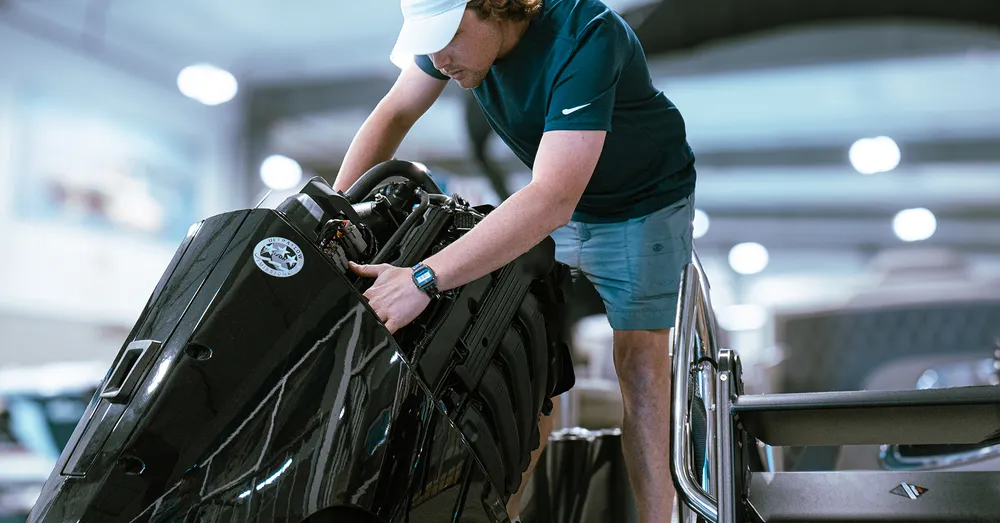
Executing a premium seasonal launch across North Texas requires strict adherence to technical parameters and comprehensive material checks. Whether backing down a high-density concrete ramp into Lake Lewisville or setting heading matrices across the deeper waters of Possum Kingdom Lake, offseason storage inevitably degrades a vessel’s mechanical and electrical continuities. When a boat sits unexercised through variable winter temperatures, small vulnerabilities—such as micro-corrosion along primary grounds or hardening water pump impellers—escalate into immediate system failures under full operational load.
Executing a phased, rigorous pre-season audit three to four weeks before your initial voyage eliminates close-quarters liabilities and protects your mechanical investment.
Phase 1: Electrical Continuity and Ignition Staging
Electrical infrastructure degradation represents the most frequent cause of early-season propulsion failures and launch ramp delays.
- Carbon-Pile Battery Load Testing: A static voltage readout on your helm display can be highly deceptive. Marine battery banks can hold a superficial surface charge that instantly collapses under the intense amperage draw of an engine starter. Connect a true carbon-pile load tester to verify cold cranking amps (CCA) across both your starting and deep-cycle house banks.
- Terminal and Ground Refurbishment: Inspect all primary battery cables for green copper oxidation or white powder crusts. Clean the connection surfaces completely with a stiff wire brush, and torque all terminal locking nuts using a mechanical wrench rather than hand-tightening to eliminate high-resistance arcs.
- Main Circuit Diagnostics: Cycle your dual-battery selector switches, primary helm breakers, and digital switching networks to verify that all systems boot cleanly without voltage drops. Manually test your navigation and anchor lighting arrays across all operational modes to ensure night-running compliance.
Phase 2: Fluid Evacuation and Life-Safety Frameworks
Your safety hardware must be fully functional and instantly accessible before your hull enters the water column.
- Dual-Mode Bilge Validation: Flood your bilge sump manually with clean water to verify that your pumps operate across both modes. The automated float switch must activate the pump instantly, and the manual helm switch must clear the fluid through the thru-hull discharge port without electrical humming or impeller binding.
- Convective Blower Aeration: For inboard or sterndrive configurations, run the bilge blower for a minimum of four continuous minutes. Confirm strong mechanical airflow and ensure the exhaust ducting is completely clear of debris or insect nests before attempting ignition.
- Acoustic and Fire Suppression Audits: Verify that your marine horn is operational and fully accessible. Check the pressure gauges and structural brackets on all onboard fire extinguishers, confirming they meet strict Coast Guard regulations and show zero sign of shell corrosion.
- PFD Inventory Configuration: Inspect all personal flotation devices (PFDs) for fabric tears, split seams, or UV-bleaching. Ensure you carry the correct size distributions matching your specific passenger manifest, keeping sports-specific Type III vests easily accessible in your primary deck lockers.
Phase 3: Helm Calibration and Articulation Controls
Operating a high-end platform like a Cobalt bowrider or a Barletta luxury pontoon inside congested channels requires smooth, immediate response from your helm controls.
- Steering Articulation Sweep: Rotate the steering wheel fully from lock-to-lock. Any sticking points, notchiness, or fluid weeping along your hydraulic steering rams indicates a critical seal failure or air pocketing that requires immediate bleeding.
- Binnacle Throttle Synchronization: Shift your mechanical or digital throttle controls through the forward, neutral, and reverse detents with the engine off. The linkages must engage cleanly without hesitation, mechanical play, or structural stiffness.
Phase 4: Open-Loop Cooling Circuit and Thermal Tracking
Open-loop marine cooling systems are highly sensitive to long storage blocks and environmental contamination from the ramp area.
- Component and Intake Inspections: Check your engine block, hose connections, and thermostat housings for dry-rotted rubber, fine hairline fractures, or loose stainless steel clamps. Verify that your lower unit raw-water intake grates are completely free of mud, silt, or lake vegetation.
- Impeller Lifecycle Analysis: Standard rubber water pump impellers dry out, harden, and crack over the winter months. A brittle impeller can split its flexible blades upon initial high-RPM acceleration, leading to immediate cooling flow restriction and engine block warping. Never ignore an overheat alarm that "goes away."
Phase 5: Structured Hour-Based Lifecycle Service
Managing an elite watercraft requires aligning your preventative upkeep with precise engine hour metrics rather than guessing.
- 100/200-Hour Mechanical Benchmarks: Check your helm hour-meter against your historical preservation log. If your drivetrain is approaching its critical 100-hour or 200-hour operational thresholds, scheduling a professional oil flush, lower-unit gear oil change, inner sacrificial anode replacement, and fuel-water separator filter swap is mandatory to protect your factory warranty.
- Establish a Service Baseline: If you are unsure of your vessel's maintenance record, start the season with a professional baseline inspection to guarantee structural and mechanical integrity.
Phase 6: Structural Trailing Architecture
A breakdown during transit to Lake Lewisville or Possum Kingdom Lake can damage your hull and endanger trailing motorists.
- Lighting and Circuit Audits: Connect your trailer harness to your tow vehicle to verify complete continuity across all running, brake, and turn-signal LED arrays.
- Atmospheric and Sidewall Tire Checks: Check your trailer tires to confirm they match their maximum cold PSI rating. Closely inspect the tread grooves and sidewall profiles for flat-spotting or dry-rot checking caused by long-term storage under load.
- Coupler and Chain Geometry: Verify the hitch coupler locks cleanly over the ball and that the safety pin completely engages. Cross your high-tensile safety chains underneath the trailer tongue to create a secure cradle that will catch the tongue if a coupler disconnects. Inspect your winch strap along its entire working length for frayed stitching or tear patterns.
Technical Frequently Asked Questions
What is the ideal timeframe to execute a comprehensive pre-season systems check?
You should conduct your pre-season check 2 to 4 weeks before your first planned big weekend. This gives you an adequate buffer to source OEM parts or secure professional service availability if you find a critical mechanical fault.
Is a standard 100-hour service interval limited to a basic engine oil swap?
No. A professional 100-hour service is an exhaustive reliability checkpoint. It includes pressure-testing lower unit seals, changing fuel-water separators, inspecting engine timing belts, checking steering fluids, and replacing raw-water pump impellers to prevent on-water failures.
Sourcing Authorized Marine Components & Care
Correcting pre-season system anomalies requires utilizing diagnostic equipment and replacement components calibrated to exact manufacturer tolerances.
- Certified Mechanical Diagnostics: Whether you need to execute an emergency water pump replacement, trace an elusive electrical short, or clean out your fuel injection rails, rely on our factory-certified technicians at the Slalom Shop Service - Lewisville, TX department to protect your investment.
- Genuine OEM Component Sourcing: For do-it-yourself mariners performing field preservation work, our dedicated Parts - Lewisville, TX counter stocks heavy-duty cold-cranking batteries, genuine factory filters, water pump impeller kits, and premium fluids engineered for your specific platform.
- Drivetrain and Power Modernization: For captains seeking to update an aging power plant with modern digital binnacles for absolute throttle precision near the trailer bunks, check our authorized Repower Mercury - Lewisville, TX division.
Fleet Allocation and Financial Coordination
What structural credit channels exist for outfitting a boat with a full electronics and safety overhaul?
Our specialized Financing office provides custom loan frameworks, allowing you to bundle major component upgrades, electronic chartplotter suites, and comprehensive Marine Insurance into a single plan.
Can I leverage my current boat as trade equity toward a newer model before next season?
Yes. We facilitate transparent, market-accurate asset evaluations through our Sell / Trade division, making it highly efficient to liquidate your old hull and apply that value directly toward our inventory of premium New Boats or thoroughly inspected Used Boats.
How do I track upcoming events or get in direct contact with Slalom Shop?
To learn about our corporate footprint serving Texas mariners since 1977, visit our About page. You can monitor our active schedule of safe-boating seminars and seasonal dealer events on our Events page, track continuous technical maintenance guides on our Blog, or see verified customer feedback on our Reviews page. To review your long-term mechanical coverages, check our Extended Service Contracts checklist, and find current promotions on our Specials page.