

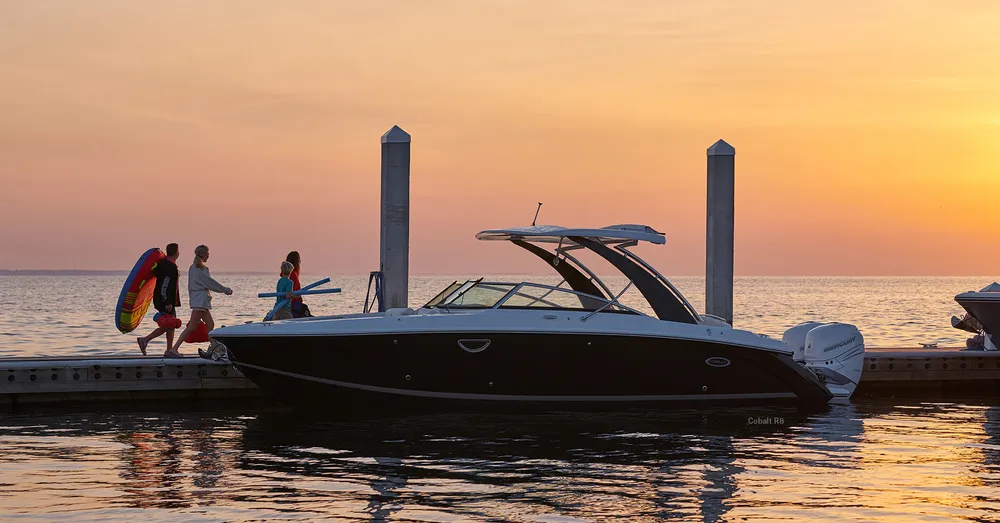
Navigating high-density marina channels and restricted shorelines across North Texas requires strict adherence to hydrodynamic principles and close-quarters pilotage protocols. On a busy weekend across Lake Lewisville or Possum Kingdom Lake, the vast majority of structural gelcoat fractures, severed mooring lines, and interpersonal conflicts occur at dead idle speeds rather than in open water. Managing a premium vessel like a Cobalt bowrider or a Barletta luxury pontoon near a terminal bulkhead demands an accurate understanding of wake displacement and vessel predictability.
Implementing a structured docking and no-wake etiquette protocol prevents expensive dock separation liabilities and ensures your crew operates with absolute predictability.
Deciphering the Hydrodynamics of No-Wake Speed
A statutory no-wake zone is not an arbitrary suggestion; it is a legally enforced safety perimeter designed to eliminate destructive wave translation. Many operators incorrectly assume that as long as their hull is not fully on plane, they are not creating a liability.
- The Displacement Trap: Operating a heavy vessel at a semi-displacement speed (bow high, stern squatting, typically between 8 and 12 MPH) generates the single most destructive, deep-running wake wave possible. This wave retains high energy that slams anchored watercraft, tears dock cleats out of wood piers, and causes severe shoreline erosion.
- The True No-Wake Baseline: A true no-wake velocity is the lowest mechanical throttle setting that still allows the lower unit or rudder to maintain safe tracking control, without throwing any visible cresting waves or white water from the transom.
- Maintain Linear Predictability: Avoid sudden throttle surges to correct drift in narrow channels, as this instantly generates a surge wave. Track a straight, predictable vector through marina corridors, keeping a wide safety buffer from paddleboards, stationary fishing platforms, and tied-up vessels.
Close-Quarters Docking Protocols That Eliminate Gelcoat Liability
The physical process of berthing a multi-ton vessel alongside a concrete bulkhead or wooden slip must be handled as a controlled, step-by-step mechanical drill.
- 1. Staging Logistics in Open Water: Complete 100% of your hardware preparation well outside the active slip channel. Deploy high-impact marine fenders at the precise height of the pier bulkheads and flake your double-braided nylon mooring lines cleanly on deck so they are entirely free of knots before your final approach.
- 2. Establish a Single Helm Spotter: Disorganizing the helm with multiple passengers shouting conflicting distance estimates causes panic. Designate one alert crew member to act as the primary technical spotter. This individual delivers calm, concise distance-to-target readouts directly to the captain, while all other passengers remain seated and silent.
- 3. Enforce the Absolute Step-Off Mandate: Explicitly forbid your crew from leaping or lunging from a moving gunwale onto a wet dock deck. A missed angle can easily be corrected by backing out; a slipped footing between a multi-ton hull and a concrete piling introduces severe, immediate physical trauma.
- 4. Master the Idle-and-Neutral Glide Technique: Never attempt to steer your vessel using sustained forward momentum. Approach the pier using short, deliberate pulses of power—engaging the gear binnacle into forward idle for one second, then immediately returning to neutral to glide. Let your hull's existing hydrodynamic drag execute the braking work.
- 5. Execute the Abort and Reset Command: If a sudden crosswind vector or a rogue wake from a passing watercraft disrupts your entry angle, immediately abort the run. Shift cleanly into reverse, back out into open water, and re-establish your approach axis. A deliberate reset is the definitive mark of professional seamanship.
Launch Ramp and Marina Common Courtesy
The public boat ramp and marina basin are shared, high-pressure maritime hubs. Maintaining efficiency and composure directly dictates the safety of the perimeter.
- Isolate Gear Staging: Never block an active launch lane or courtesy dock while loading coolers, dry bags, and tow-sports equipment. Complete 100% of your vessel packing in the designated landside staging parking lot before backing down the concrete ramp.
- Acoustic Profiling: Turn down your multi-zone marine audio amplifiers completely when entering tight marina slips, fuel docks, or residential canals. Keeping audio levels low is vital to ensuring the captain can hear verbal instructions from dock hands and acoustic warning signals from surrounding boats.
- Exercise Fleet Patience: Offer ample clearance and professional patience to newer operators struggling with trailing alignments or close-quarters maneuvers. Every proficient mariner started at the same baseline.
Correcting Control Irregularities with Professional Support
If your vessel struggles to maintain a clean tracking line at slow speeds, or if your mechanical binnacle requires excessive physical effort to find the neutral detent, you are likely fighting a mechanical control liability rather than an environmental skill issue.
- Certified Steering and Throttle Diagnostics: Over the winter months, hydraulic steering systems can develop internal fluid leaks or air pocket locks, and mechanical control cables can stretch or bind inside their support housings. Schedule an automotive-level diagnostic checkup with our factory-trained specialists at the Slalom Shop Service - Lewisville, TX department to restore instantaneous control response.
- Genuine OEM Component Sourcing: For mariners performing their own dockside upkeep, our dedicated Parts - Lewisville, TX counter supplies factory-direct filters, synthetic fluids, sacrificial zinc anodes, specialized vinyl cleaners, and high-tensile mooring lines.
- Transom Power Overhauls: For captains operating older engines that exhibit erratic low-RPM stumbling or lag during shifting, outfitting your transom through our authorized Repower Mercury - Lewisville, TX specialist installs advanced digital throttle networks for absolute precision near the slips.
Frequently Asked Questions
What structural credit frameworks exist for outfitting a boat with a full tech and safety overhaul?
Our specialized Financing office provides custom loan frameworks, allowing you to seamlessly bundle your choice of high-performance modern hull, reliable outboards, technical electronics, and comprehensive Marine Insurance packages into a single plan.
Can I leverage my current watercraft as trade equity to fund an upgrade this season?
Yes. We coordinate transparent, market-accurate asset evaluations through our internal Sell / Trade division, making it highly efficient to liquidate your old hull and apply that value directly toward our curated inventory of Cobalt bowriders and Barletta luxury pontoons. Explore our selection of premium New Boatsor thoroughly inspected Used Boats.
How do I track upcoming dealer events or connect with Slalom Shop?
To learn about our corporate legacy serving Texas mariners since 1977, visit our About page. You can monitor our active schedule of safe-boating seminars and seasonal dealer events on our Events page, track continuous technical maintenance guides on our Blogpage, or see verified customer feedback on our Reviews page. To review your long-term mechanical coverages, check our Extended Service Contracts checklist, and find current promotions on our Specials page. For showroom maps and operating hours across all our regional dealer hubs, visit our Contact page.